
 Industries
 Products
 Services
 Solutions
Blog | MEPPI: Providing Data Centers a Route to Flexible Grid Interconnection
Utilities across North America are struggling to keep up with the rising demand for data center interconnection capacity. Multiple industry studies point to steep growth in AI‑driven electricity demand over the next decade. EPRI predicts that data centers may account for about 9% of total U.S. electricity generation by 2030. On the utility side, a Reuters review of earnings transcripts from companies including Dominion, Duke, PSEG, Oncor, and CenterPoint found that nearly half reported data center power inquiries exceeding their existing peak generation capacity, underscoring growing strain on the grid.
These rejections are usually due to the utility modeling a worst-case load scenario against the data center’s peak-rated capacity and finding that there are scenarios that would breach capacity limits or equipment ratings.
Data centers often use management software that allows them to monitor and control their operation and compute loads. So why can’t they use these flexibility tools to get their interconnection applications approved?
Today, MEPPI is helping data centers and utilities implement programs to do just that: unlock grid capacity so that data center interconnection applications are approved.
What are Data Center Flexible Interconnections?
For 19 years, MEPPI has been the leader in flexible interconnection applications for distributed energy resource management systems (DERMS). MEPPI’s DERMS product has enabled dozens of utilities to interconnect more DER (such as PV wind, BESS, EVs, Load) than the utility would have accepted without a software application. When compared against a traditional worst-case interconnection analysis, MEPPI Grid DERMS typically allows a 50-100% increase in hosting capacity on a distribution feeder by providing fast-acting (500 ms) control of DER assets to mitigate real-time grid conditions. These systems are backed by fail-safe actions enforced by MEPPI’s DER Gateway controllers who ensure utility equipment is protected in any failure scenario.
The same worst-case interconnection analysis is used by utilities to determine whether data center load should be approved for interconnection. Using the same methods proven since 2007, MEPPI is now configuring fast-acting control of load management software based on real-time grid conditions. In the rare scenario that total load on a network increases above safe levels due to residential or commercial demand or lack of generation, data center load can be reduced temporarily until conditions pass. MEPPI’s DER Gateway is being installed at data centers to provide the same fail-safe control required by utilities.
In this way, data centers can both be guaranteed a given MW capacity and promised another layer of MW capacity that is flexible – depending on grid conditions. Most of the time, data centers can receive their full allotment of guaranteed + flexible capacity. In MEPPI’s experience, reductions in the flexible capacity come out to under 5%.
How do Data Centers Respond to Load Reduction Requests?
When a data center gets a request to reduce its load via a flexible interconnection scheme, it can choose among many levers to meet the request.
Onsite DER: Some data centers manage on-site storage in the form of battery storage or even physical storage such as flywheels. When coupled with generating DER such as PV and wind, data centers can keep these resources charged for dispatch during flexibility requests. Uninterruptable power supplies (UPSs) can be used for this purpose, but only to sustain very short-term reductions (<30 minutes).
Standby Generation: Many data centers can self-sustain loads or even island from the grid by using thermal generation on site. In these data centers, onsite storage or UPSs provide power during a transition while the thermal generators spin up. In this way, data centers can manage prolonged or unpredictable reduction periods.
Compute Shifting: Data center business models rely on sustained high compute – meaning that shifting generation per the above options is the preferred approach. However, many compute loads can be shifted if necessary, depending on the type of data center it is. For instance, enterprise data centers generally have more ability to shift compute loads than co-located data centers, which do not have much visibility into what compute services their tenants are running.
Value for Data Centers and for Utilities
Data Centers taking part in flexible interconnection programs lower the barrier of one of their biggest challenges which is connecting to the grid. Utilities throughout the country are struggling to procure generation and infrastructure at the pace necessary to keep data center owners satisfied. Using flexible interconnections, data center operators can connect to the grid and start operating utilizing existing grid capacity while the utility builds new infrastructure required to achieve full firm capacity.
There are two ways electric utilities benefit from providing a flexible interconnection program for data centers. The first way is by increasing the speed to revenue generation. By reducing the timeline of interconnection by months or years, the utility will begin providing power to the data center and earning the return on their investment.
Secondly, utilities benefit through optimizing their infrastructure capacity. Many of MEPPI’s utility customers indicated they receive connection applications from data centers for a certain capacity, but that actual interconnected load ends up being a fraction of that capacity. This causes the utility to over-upgrade grid infrastructure for the interconnected load. Through a Flexible Interconnection program, utilities can offer data centers a mix of firm and non-firm capacity, minimizing unused capacity on their systems.
MEPPI DERMS Components
Case Study Example for Data Center Load Management
Figure 1 presents a real-world example of a MEPPI Grid DERMS deployment of data center flexible interconnection.
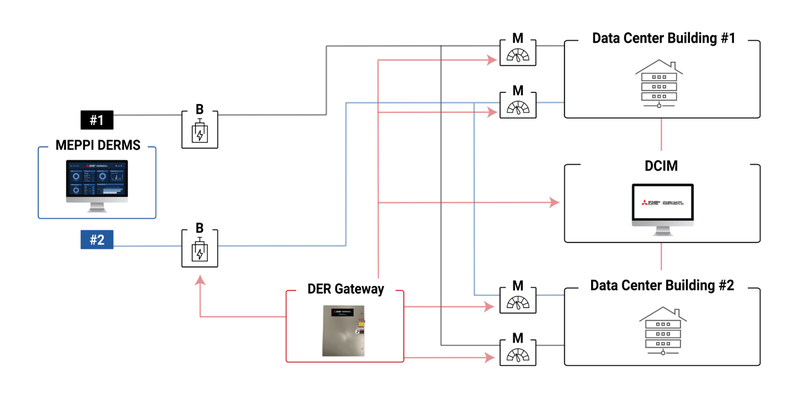
Figure 1: Data Center Flexible Interconnection Case Study
This case study demonstrates how MEPPI Grid DERMS leverages its grid-aware, real-time control along with the failsafe control of the DER Gateway to enable data center flexible interconnections.
As shown in Figure 1, two data center buildings are managed by a data center infrastructure management (DCIM) system. They each have two redundant power connections which are protected with remote breakers (B).
When the load measurements (M) combine to negatively impact grid conditions or exceed real-time available generation capacity, the DCIM is instructed to reduce data center load.
Under extremely rare emergency circumstances, such as the DCIM becoming unresponsive to MEPPI DERMS instructions during conditions that endanger grid equipment, the DER Gateway is empowered to open the breakers.
To learn more about our MEPPI DERMS and MEPPI DER Gateway products please visit: https://www.meppi.com/products/der-management-systems