What Is DERMS? Definition, History, Use Cases, and Future Outlook
What is a DERMS?
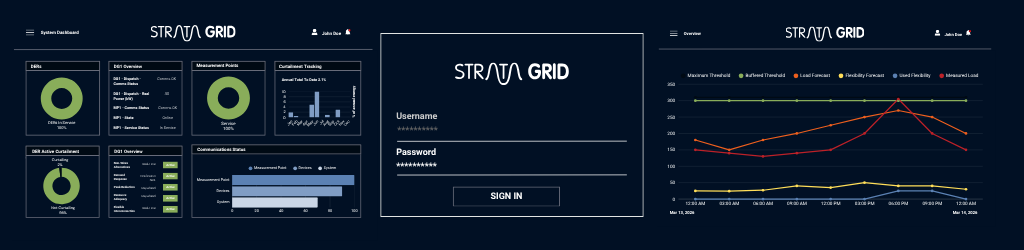
A Distributed Energy Resource Management System (known by the acronym DERMS) is an advanced software platform designed to monitor, control, and optimize distributed energy resources (DERs) across the electric grid. These resources include photovoltaic (PV), wind generation, battery energy storage systems (BESS), electric vehicles (EVs), and other decentralized energy assets, such as aggregated thermostats. DERMS enables utilities, grid operators, and energy service providers to integrate and manage these resources efficiently, ensuring grid reliability, stability, and safety.
Originally developed to address the growing complexity of modern energy systems, DERMS has evolved from early monitoring and visibility platforms into sophisticated systems that support real-time analytics, automated decision-making, and predictive forecasting. Today’s DERMS solutions play a critical role in enabling the transition to a cleaner, more resilient energy future by facilitating demand response, voltage optimization, and coordinated operation of distributed generation.

A Brief History of DERMS
Our energy grid was designed to flow in one direction. From the centralized power generation down to transformers, across power lines, to substations, and eventually to end customers. However, as energy needs, regulatory reforms and technologies have expanded, new sources of generation and flexible load are now embedded throughout the distribution network. These include residential solar panels, home battery systems supporting EV charging, and large-scale deployments of DERs across campuses, communities, and entire cities. As a result, the distribution grid has become significantly more complex, challenging traditional planning and operational models.
The primary objective for utilities remains unchanged: keeping the lights on safely. Utilities are therefore appropriately conservative, ensuring that existing infrastructure is protected against thermal, voltage, and frequency constraints. Because renewable generation is inherently variable, distribution systems have historically been planned to accommodate worst-case operating conditions. Expanding infrastructure through new lines, transformers, and substations can be both costly and delayed due to equipment backlogs and long planning cycles. DERMS enables utilities to dynamically manage constraints, protect the network during peak conditions, and unlock unused capacity during normal operations, allowing fuller utilization of existing grid assets before infrastructure upgrades are required.
MEPPI was an early pioneer in the development of this kind of smart grid technology. In the early 2000s, research conducted by members of Strathclyde University focused on solving clean energy integration challenges in the Orkney Islands, Scotland. This work led to the development and patenting of ‘Active Network Management,’ which later became the technological foundation for MEPPI’s Strata Grid DERMS software. In parallel, similar challenges around the world prompted other organizations to define common frameworks and requirements for what would ultimately be recognized as DERMS, with leadership from institutions such as the Electric Power Research Institute (EPRI) and the Smart Electric Power Alliance (SEPA).
What became clear was that while Active Network Management effectively addressed specific grid modernization goals, the accelerating pace of DER adoption required a broader and more extensible set of use cases.

How does DERMS compare to other smart technologies?
DERMS have emerged alongside other smart grid technologies such as Distribution Management Systems (DMS), Advanced Distribution Management Systems (ADMS), and Demand Response Management Systems (DRMS). While these systems share some overlapping capabilities, DERMS is purpose-built to manage distributed energy resources and to coordinate both grid-connected and customer-owned assets.
Unlike DMS and ADMS, which focus primarily on network operations such as switching, fault isolation, and outage restoration, DERMS emphasizes the dynamic control, optimization, and aggregation of diverse DER portfolios. While DERMS shares certain characteristics with DRMS and ADMS — including grid interaction and elements of market responsiveness — it is architected specifically to address the scale, diversity, and operational complexity of DER portfolios.
Some utilities explore extending existing ADMS platforms to incorporate DERMS functionality; however, these systems are not designed for continuous, real-time DER orchestration. ADMS architectures typically prioritize network visibility and reliability workflows, rather than the flexible control logic, grid-aware algorithms, and specialized interfaces required to manage large volumes of heterogeneous DER assets.
In practice, ADMS power-flow and network model updates often operate on time scales appropriate for traditional distribution operations, but are insufficient for high-penetration DER environments that require real-time control. Without a dedicated DERMS layer, utilities may be limited in their ability to fully utilize available grid capacity or realize the full operational and economic value of distributed energy resources.

What are the main features and use cases of a distributed energy resource management platform?
As DERMS technology continues to mature, new standards are being established to support local, regional, and federal mandates from organizations such as the Department of Energy (DOE) and the Federal Energy Regulatory Commission (FERC). Utilities begin their grid modernization journeys from very different starting points. Some have already deployed supervisory systems, such as ADMS and SCADA and seek to add DER control capabilities, while others are building foundational capabilities from the ground up.
To maximize value, DERMS implementations are typically phased, prioritizing use cases that address the most urgent grid constraints and deliver early operational benefits. Common Grid DERMS use cases include:
- Flexible Interconnection: Unlocks hosting capacity and enables dynamic DER control to reduce interconnection queues.
- DER Constraint Management: Monitors and controls DERs by applying device-level limits to ensure safe and reliable operation.
- Circuit Load Management: Uses real-time and historical data to balance electricity demand across circuits and avoid overloads.
- Demand Response: Provides visibility into customer programs and adjusts energy usage during peak demand or grid stress events.
- Vehicle-Grid Integration (VGI): Enables EV participation by coordinating charging and discharging schedules to support grid operations.
- Volt/Var Optimization (VVO): Allows operators to regulate voltage and reactive power, improving efficiency and reducing losses.
- Virtual Power Plants (VPPs): Aggregates DERs for inclusion in network models and market dispatch as a single controllable resource.
- Microgrid Management: Oversees localized energy systems capable of operating autonomously or in coordination with the main grid.
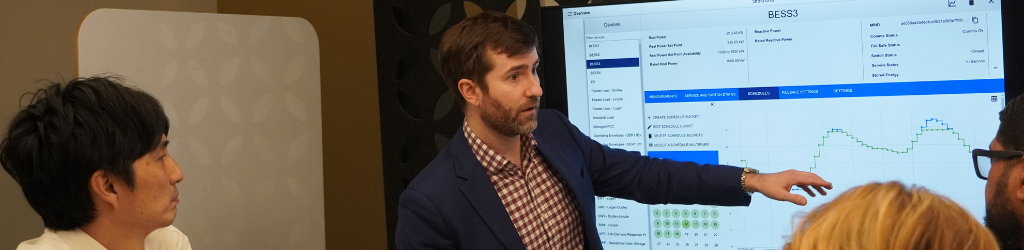
DERMS capabilities are expected to continue expanding as regulatory frameworks evolve and new challenges arise, such as the increasing backlog for data centers. Utilities increasingly look for vendors that can offer bespoke options to create a system that truly meets their needs.

What are the different types of DERMS?
DERMS platforms are increasingly differentiated by the types of customers they serve. Common customers include utilities managing grid-scale assets, and developers, aggregators, or cooperatives managing customer-owned DER portfolios. DERMS are commonly categorized into the following types:
- Edge DERMS: Manages large numbers of behind-the-meter (BTM) DERs (such as batteries, thermostats, and EVs) across multiple device manufacturers.
- Grid DERMS: Integrates closely with a utility’s operational technology (OT) systems to manage front-of-meter DERs and aggregated BTM resources, often in coordination with an Edge DERMS.
- Aggregator DERMS: Manages fleets of DER assets, such as EVs, battery systems, or flexible demand-side resources, under aggregated control.
These categories reflect industry‑recognized DERMS classifications outlined by the Smart Electric Power Alliance (SEPA) in its “Decoding DERMS” whitepaper.

How do DERMS compare?
Delving deeper into DERMS vendors, there is a wide range of solution maturity across the market. Some platforms are developed by established technology vendors, while others are newer entrants. As a long-standing DERMS provider, MEPPI brings a practitioner perspective informed by more than fifteen years of live system deployments.
The reality is that not all DERMS platforms operate at the same level of functional maturity. Managing distribution networks with high DER penetration requires operational experience, robust integration capabilities, and proven control of real devices. MEPPI has 25 live deployments of DERMS controlling live DER assets across operational grids. The contrast between the purpose‑built, sophisticated capabilities of a DERMS and attempting to deliver similar functionality through an ADMS module is significant. The ADMS module approach results in lack of real‑time visibility and control.
MEPPI’s Strata Grid DERMS is designed as a DER-centric platform, incorporating patented control technologies that enable sub-second DER response, either autonomously or through operator-in-the-loop workflows. In operational environments, milliseconds can materially impact grid safety, curtailment levels, and infrastructure investment requirements. MEPPI’s systems are not simply a roadmap item of the future, Strata Grid is managing and optimizing DER today, delivering operational confidence and measurable return on investment for customers.

DERMS Checklist
If your utility is evaluating DERMS options, key questions include:
- Does the vendor have demonstrated integration experience and live operational deployments?
- Can they support planning, analysis, and advisory services in addition to software delivery?
- Is the system configurable to evolving grid and regulatory requirements?
- Are critical capabilities available today, rather than solely on a future roadmap?
- What is the expected timeline from integration to operational value?
From a system perspective, utilities should:
- Start with the highest-priority, highest-value use cases.
- Incrementally expand DERMS capabilities as operational maturity grows.
- Deploy DERMS where DER concentration and customer impacts are most significant.
- Ensure connectivity across substations, DER devices, and customer programs.
- Recognize that DERMS use cases will continue to evolve alongside grid modernization efforts.

The Future of DERMS
From the early 2020s through the present, DERMS deployments have largely focused on DER visibility and peak load management. Across much of North America, DER penetration initially reached levels where monitoring and data collection delivered the greatest value. As the industry enters the second half of the decade, utilities are increasingly confronted with the operational implications of managing large volumes of flexible, customer-owned resources in real time.
This shift is driving a reassessment of what DERMS platforms must deliver and how regulatory frameworks and incentive programs can evolve to enable active DER participation. DERMS 2.0 is expected to place greater emphasis on real-time coordination, market integration, and automated control to support reliability, resilience, and decarbonization objectives.