End-to-End DERMS Solutions for Cooperative Energy Utilities
DER Management solutions for rural cooperatives to optimize distributed renewable energy assets from grid-scale to customer programs, avoid infrastructure upgrades, and strengthen reliability.
Your Cooperative’s Challenge: Meeting growing demand without building new infrastructure
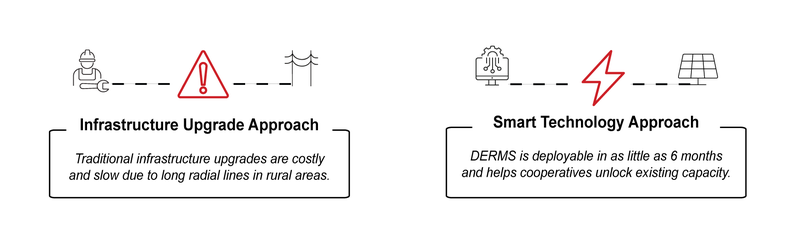
Electric cooperatives are facing unprecedented pressure. Electricity demand is surging driven by electrification, data centers, and economic growth. More than 115,000 MW of baseload generation is forecasted to retire in the next decade (NRECA Fact Sheet). At the same time, distributed energy resources (DERs) like solar, smart thermostats, and EVs are proliferating across cooperative territories. Cooperative utilities tend to have longer radial lines in rural areas, which means increased loading and DER penetration can create unique operational complexity.
Traditional infrastructure upgrades are costly and slow, and conventional energy systems are becoming more outdated and overloaded every day. What if you could reduce peak loads, integrate DERs, and manage member programs without building new wires? That’s where DERMS comes in.
What is a DERMS and how can you utilize one? Download Now.
What Is DERMS and Why It Matters
A Distributed Energy Resource Management System (DERMS) is the software backbone for modern grid flexibility. It enables cooperatives to:
- Integrate DERs like solar, batteries, and EV chargers without compromising reliability
- Optimize member programs bridging the gap between utility-scale orchestration and customer-side flexibility by integrating demand response
- Reduce peak demand through dynamic load management and demand response
- Utilize Non-Wires Alternatives instead of infrastructure upgrades to optimize and control DERs during times of system constraint
- Enhance resilience during extreme weather events
DERMS provides real-time visibility and control, turning DERs into assets instead of liabilities.
Policy Drivers: FERC Order 2222 and DOE Initiatives
Federal policy is accelerating DER adoption. FERC Order 2222 requires regional grid operators to allow aggregated DERs to participate in wholesale markets, creating new revenue streams for cooperatives (FERC Explainer). This means DERMS isn’t just about local grid management; it’s about unlocking market opportunities and future-proofing your operations. [ferc.gov]
DER Growth Among Cooperatives
Cooperatives are already embracing DERs. As of 2021, co-op solar capacity exceeded 2.2 GW and continues to grow (NRECA DER Interconnection Report). Nationwide, distributed energy resources are projected to reach 387 GW by 2025 (Wood Mackenzie). This rapid expansion demands smarter tools for coordination and control.
Strata Grid: Built for Cooperative Needs
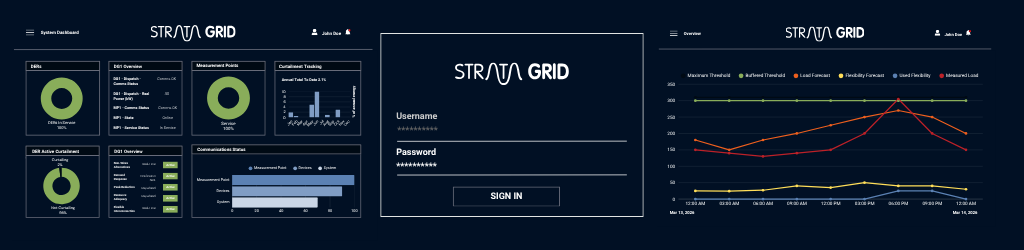
Our Strata Grid platform is an end-to-end DERMS software that combines real-time control with grid and market optimization, enabling cooperatives to:
Case Study: Western Cooperative Addresses Peak Demand
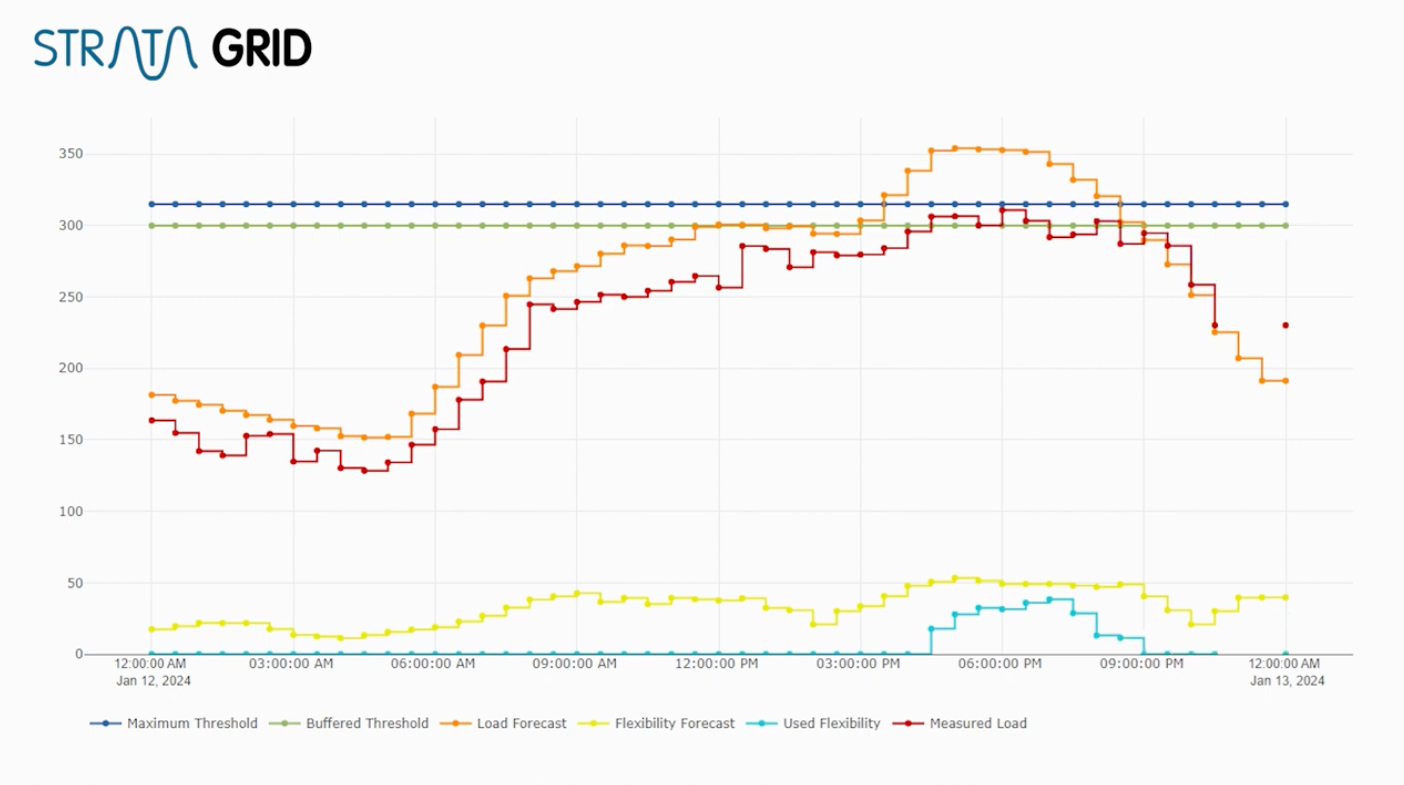
A western U.S. cooperative partnered with us to deploy Strata Grid for peak load reduction. By controlling electric vehicle charging and smart thermostats, the co-op will achieve:
- Reduction in peak demand during critical hours
- Improved member satisfaction through customer programs participation
This project demonstrates how DERMS delivers measurable benefits while aligning with cooperative principles.
Empowering America’s Electric Cooperatives
At MEPPI, we share your mission: reliable, affordable, and sustainable energy for rural communities. Our solutions are ideal for cooperatives with a proven record of success, and scalable platform to grow as you implement additional DER resources and need additional use cases.